
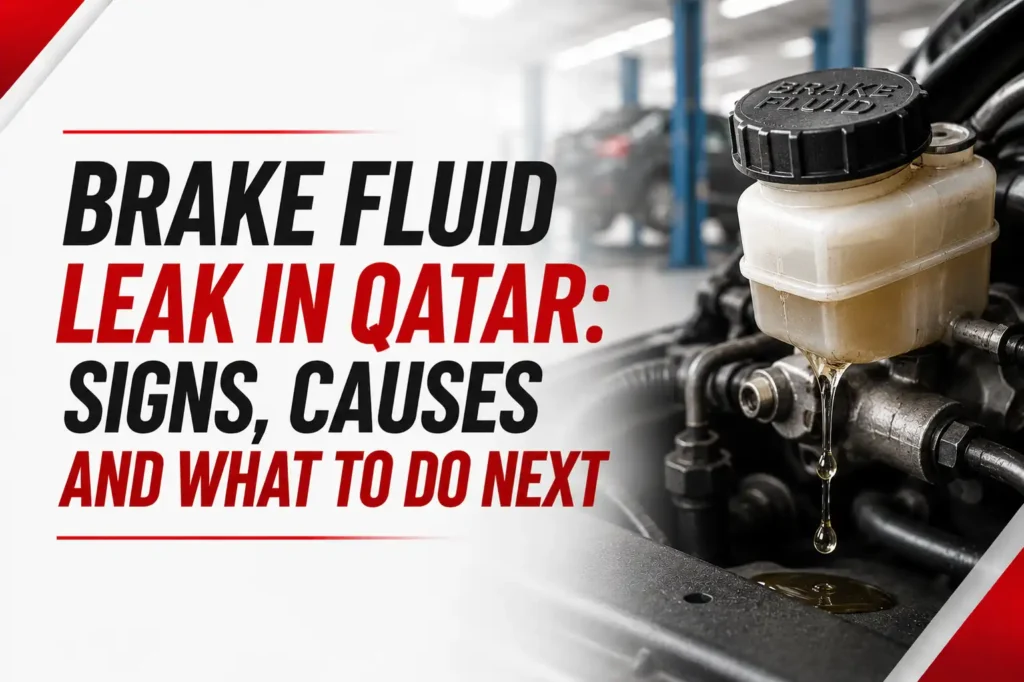
You press the brake pedal at a roundabout, and it sinks further than it should before the car actually slows down. That single moment, more than any warning light, is usually what sends a driver searching for “brake fluid leak” at 11pm. It’s a fair instinct. Brake fluid is the one component in your car where a small, slow problem can turn into a big, sudden one, and Qatar’s heat and stop-start city driving don’t make it any more forgiving.
What a Brake Fluid Leak Actually Means
Brakes work on hydraulic pressure. When you press the pedal, brake fluid gets pushed through sealed lines to the calipers, which then clamp the pads against the discs. That system only works if it’s sealed and full. A leak means fluid is escaping somewhere along that path, whether from a line, a hose, a caliper seal, or the master cylinder itself. Less fluid means less pressure, and less pressure means the brakes need more pedal travel, more distance, or both, to do the same job.
Signs Your Car Might Have a Brake Fluid Leak
Some of these show up gradually. Others show up all at once.
- A soft or spongy brake pedal: It sinks further than usual, or feels like it’s pressing into something less solid than before.
- Brake fluid visible under the car: It’s a light, oily fluid, often with a faint yellowish or amber tint, usually pooling near a wheel rather than centrally under the engine.
- The brake warning light comes on: Most modern vehicles trigger this once fluid drops below a set level in the reservoir.
- Longer stopping distance: The car takes noticeably more room to stop than it used to.
- You keep topping up the reservoir: Fluid that shouldn’t need regular topping up but keeps dropping is telling you something is escaping, not evaporating.
Any one of these on its own is worth a look. Two or more together shouldn’t wait.
What Causes a Brake Fluid Leak
A handful of points in the system tend to be the actual source, and none of them fix themselves.
- Damaged or corroded brake lines, particularly on older vehicles or ones exposed to a lot of road grit.
- Worn brake hoses, the flexible sections near the wheels that flex with steering and suspension movement and degrade with age and heat.
- A leaking brake caliper, usually from a worn internal seal that lets fluid seep past the piston.
- Master cylinder problems, where internal seals wear and let fluid pass where it shouldn’t, sometimes without any visible external puddle at all.
That last one matters. A master cylinder leak can drain fluid internally, so the absence of a puddle under the car doesn’t rule out a leak. It rules out one type of leak.
Is It Safe to Keep Driving?
Short answer: not for long, and not without checking it first. A slow leak might still leave you with brakes that work, just with reduced margin. A fast leak, or one that’s already produced a spongy pedal, means the hydraulic system has already lost pressure it needs.
Braking distance and pedal response are not things you want to discover are compromised at the exact moment you need them. If you’re already seeing a soft pedal or a warning light, treat it as something to get looked at before your next long drive, not after.
Brake Fluid Leak vs Low Brake Fluid: What’s the Difference
| Brake Fluid Level Dropping Normally | Brake Fluid Leak |
| Fluid may drop slightly as brake pads wear. | Fluid drops repeatedly or noticeably. |
| Caliper pistons extend as the brake pads become thinner. | Fluid escapes from a damaged or failing brake component. |
| The change is usually gradual. | The fluid level may fall quickly or continue dropping after a top-up. |
| No visible fluid should appear around the vehicle. | You may notice fluid around brake lines, hoses, calipers, or under the vehicle. |
| Braking performance generally remains normal. | A leak can cause a soft or spongy brake pedal and reduced braking performance. |
| Usually addressed during routine brake maintenance. | Requires prompt inspection to identify and repair the source of the leak. |
| What to do: Monitor the level and have the brakes checked during scheduled service. | What to do: Avoid ignoring the pro |
How Qatar’s Roads and Heat Affect Brake Fluid
Doha traffic is heavy braking traffic. Stop-and-go on the corniche or through the city centre puts brake components through more heat cycles than steady highway driving does, and Qatar’s ambient temperatures push that further.
Brake fluid is hygroscopic, meaning it absorbs moisture over time, and heat accelerates the effect that moisture has on seals and hoses. Vehicles that see mostly urban Doha driving, especially older vehicles or ones with higher mileage, tend to show hose and seal wear earlier than the same models would in milder, less stop-heavy conditions.
It’s not a reason to panic. It’s a reason to have the brake system looked at on a schedule rather than only when something already feels wrong.
What Happens When You Get It Checked
A proper inspection starts with the reservoir and works outward: fluid level and condition first, then a visual check along the lines, hoses, and calipers for the source of the leak. Depending on what’s found, the fix might be as simple as replacing a hose, or it might involve a caliper seal or master cylinder repair, followed by bleeding the system to clear air and restore full pressure.
AMTTS does brake fluid inspection and service at the Doha branch (B-Ring Road, opposite Capital Police Station) and can tell you during the check whether you’re looking at a fluid top-up, a full flush, or a repair to the actual leak source.
FAQs
What are the signs of a brake fluid leak?
The signs of a brake fluid leak include a soft or spongy brake pedal, visible fluid under the car near a wheel, the brake warning light coming on, longer stopping distances, and having to top up the fluid reservoir more often than usual.
Can you drive with a brake fluid leak?
Driving with a brake fluid leak is risky because braking pressure and pedal response are already reduced, and the leak will typically get worse rather than better. A slow leak may still allow short trips, but the vehicle should be checked before any longer drive.
What causes brake fluid to leak?
Brake fluid leaks are usually caused by damaged brake lines, worn brake hoses, a leaking brake caliper seal, or a worn master cylinder that lets fluid pass internally.
How do I know if my brake fluid is low?
Low brake fluid shows up as a warning light on the dashboard, a fluid level visibly below the minimum mark on the reservoir, or a pedal that feels softer than normal. A slight drop can be normal pad wear, but a repeated or rapid drop points to a leak.
How often should brake fluid be changed?
Brake fluid change intervals depend on the vehicle manufacturer’s recommendation and the fluid’s condition, since it absorbs moisture over time. Checking fluid condition during routine servicing is the most reliable way to know when it actually needs changing, rather than going by a fixed calendar date alone.
Where does brake fluid usually leak from?
Brake fluid most commonly leaks from worn brake hoses, corroded brake lines, caliper seals, or the master cylinder. Caliper and hose leaks are usually visible under the car; master cylinder leaks can occur internally without an obvious puddle.